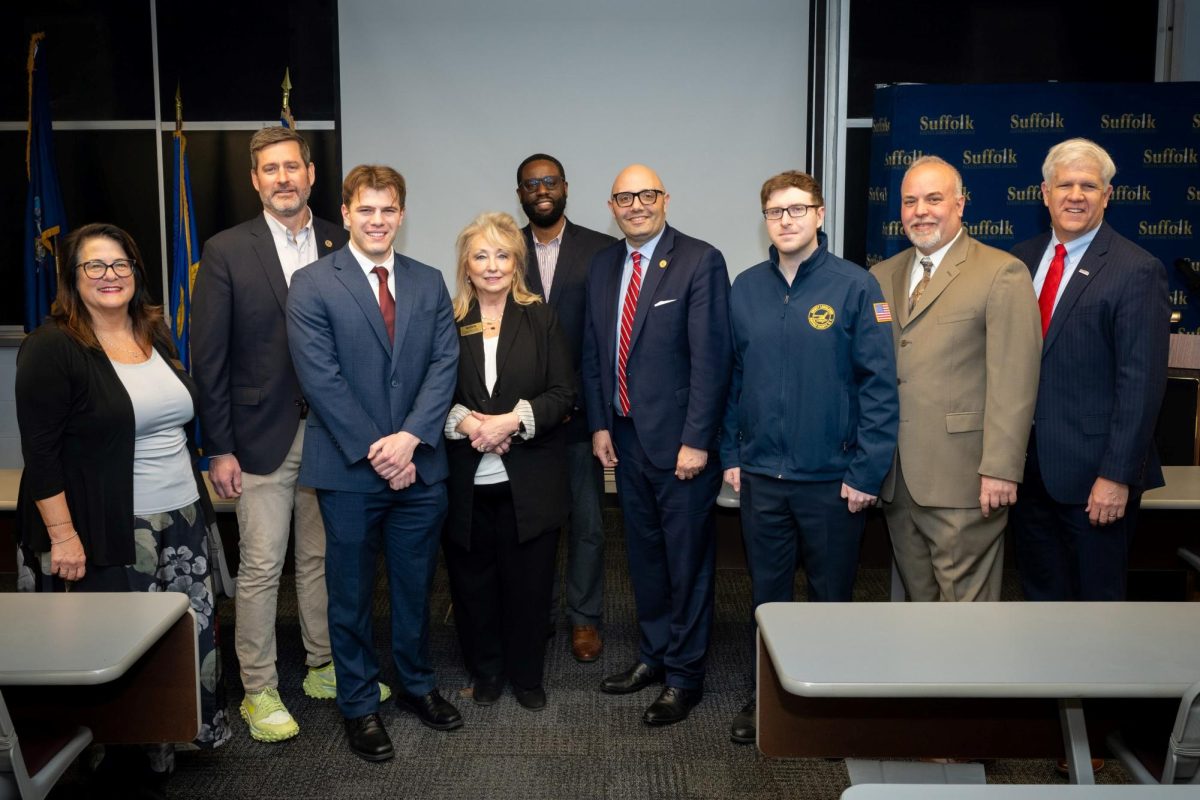
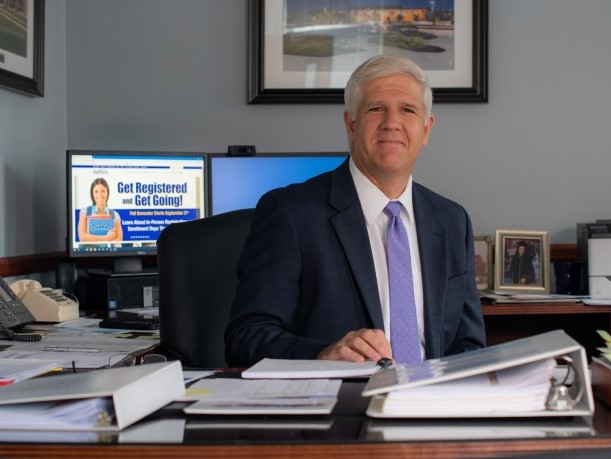




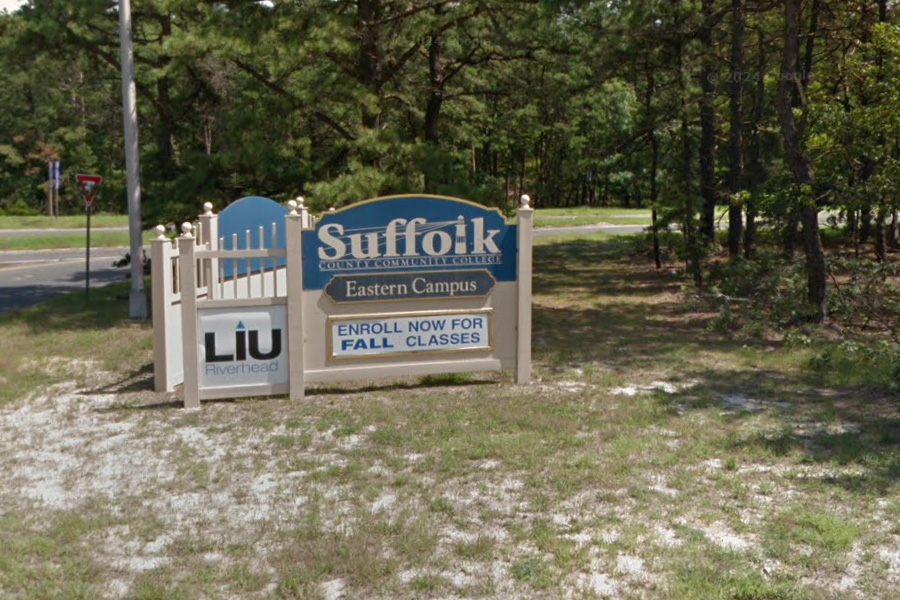























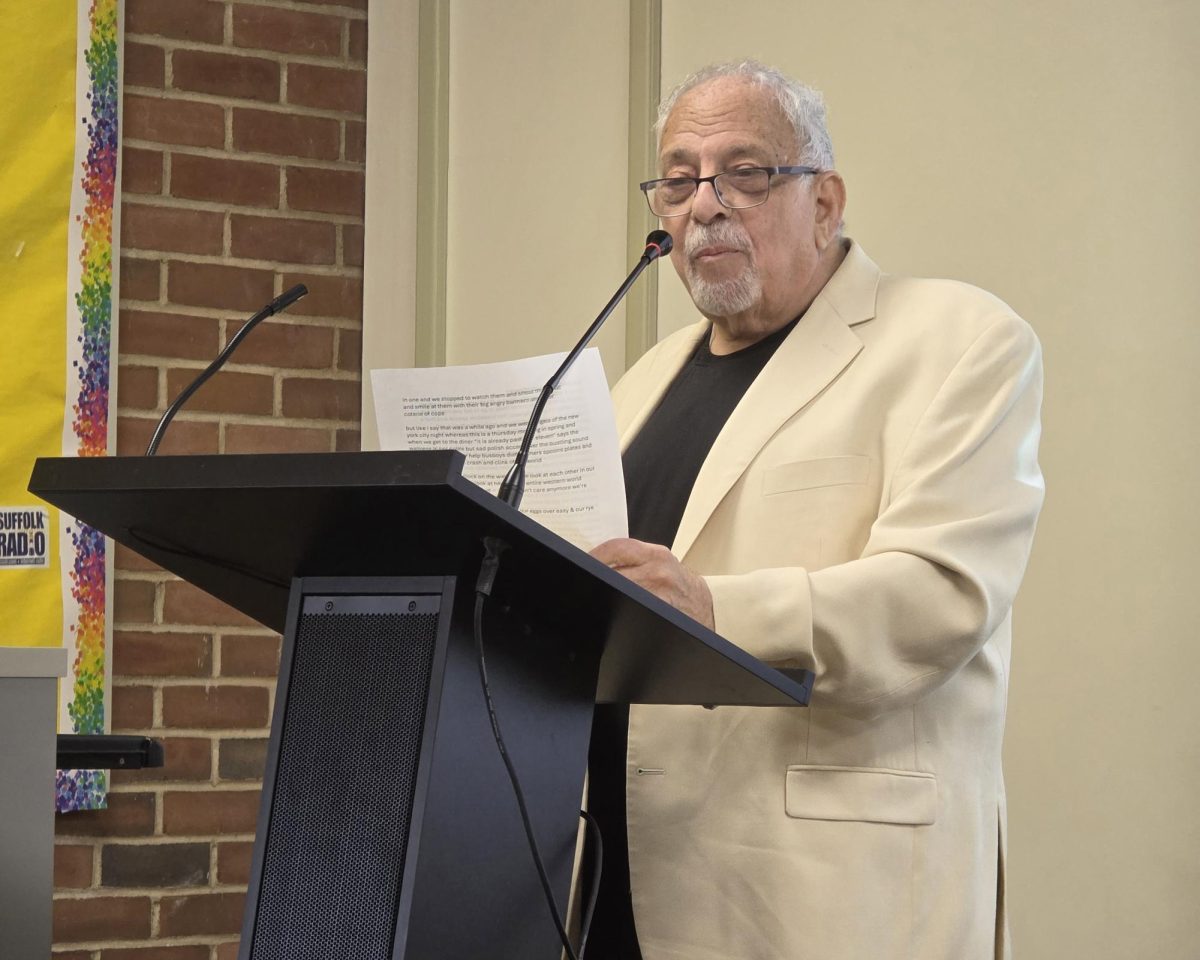
Suffolk County’s first poet laureate, George Wallace, encouraged students at Suffolk County Community College’s Ammerman campus to embrace “unabashed enthusiasm” for the creative process during a guest appearance on March 11.
Speaking to students and faculty in the Babylon Student Center’s Mildred Green Room, Wallace read from his body of work and sparked a modern debate by demonstrating how he uses artificial intelligence to transform his poetry into music.
“I would like people to feel unabashed enthusiasm for doing something creative. It doesn’t even have to be poetry,” Wallace said. “That’s the most important thing. Be passionate about art.”
The presentation began with Wallace performing several original poems, including “Mozzarella Soup,” a piece that resonated with psychology major Sophia Goehringer.
“The importance of looking into everyday life and seeing the nuances in even the smallest things can be profound, and he really showcased that,” Goehringer said.
Following the readings, the discussion shifted toward the controversial intersection of technology and art. Wallace showcased his current projects, where he utilizes AI as a tool to produce song versions of his written work. While the rise of AI remains a point of contention in the creative community, Wallace told the audience he views it as a useful instrument for multimedia experimentation.
Goehringer noted that while the use of AI in art is a “difficult topic” because of its potential to replace traditional forms of labor, finding ways to incorporate new media is essential for modern artists.
During a closing question-and-answer session, Wallace offered practical advice to student writers struggling with the vulnerability of sharing their work. Eylin Lainez, an early childhood education major, asked the poet how to handle writing that feels too personal to go public.
“He said to create a persona and to write from that perspective, so you separate yourself from the person and the work that you’re creating,” Lainez said. “I think I have to work on that.”
Wallace concluded the event by emphasizing that art is what makes the human experience digestible and meaningful.
“I wouldn’t eat raw food. Without art, we’re eating raw food,” Wallace said. “It’s a transformational thing. We have a certain amount of time or quantity of experiences on earth, and not to cook them up—not to transform them into magic—is a crime.”