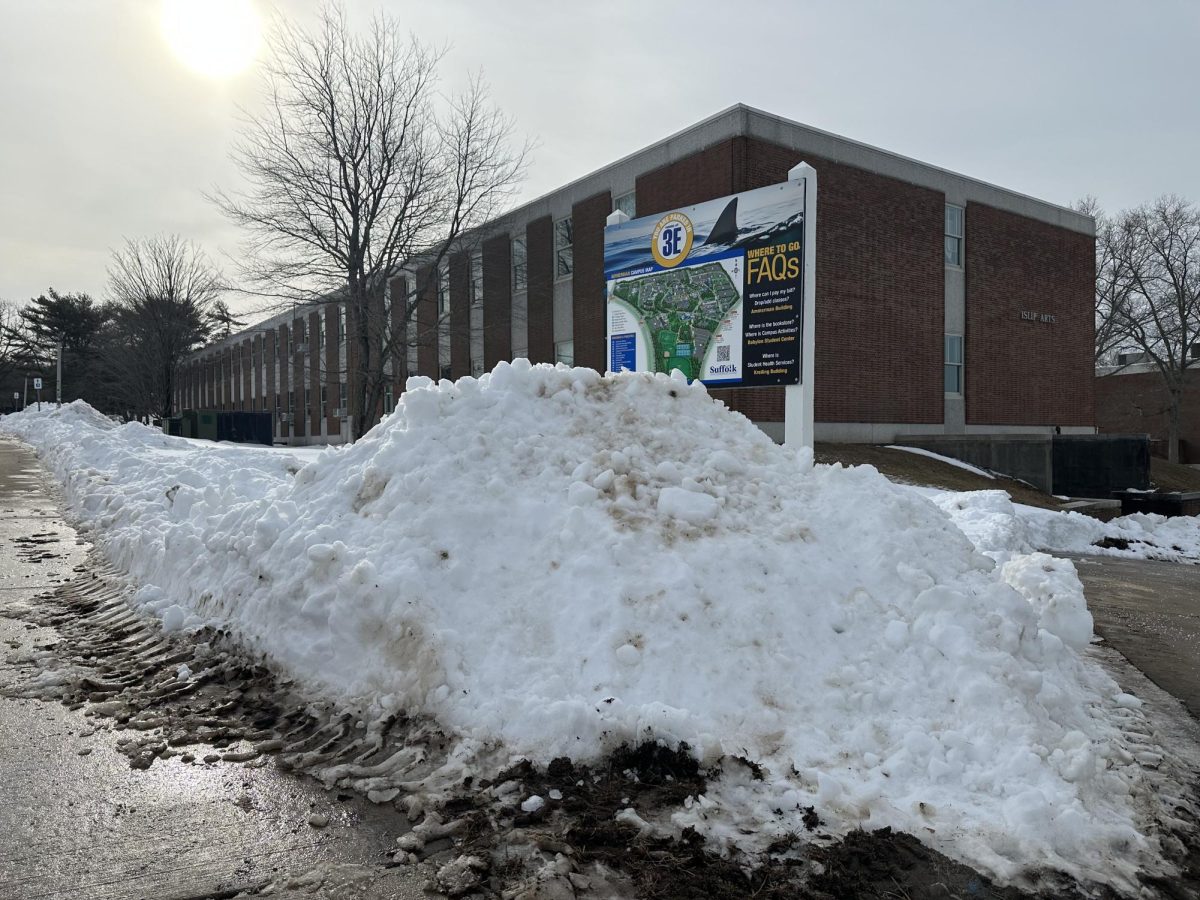
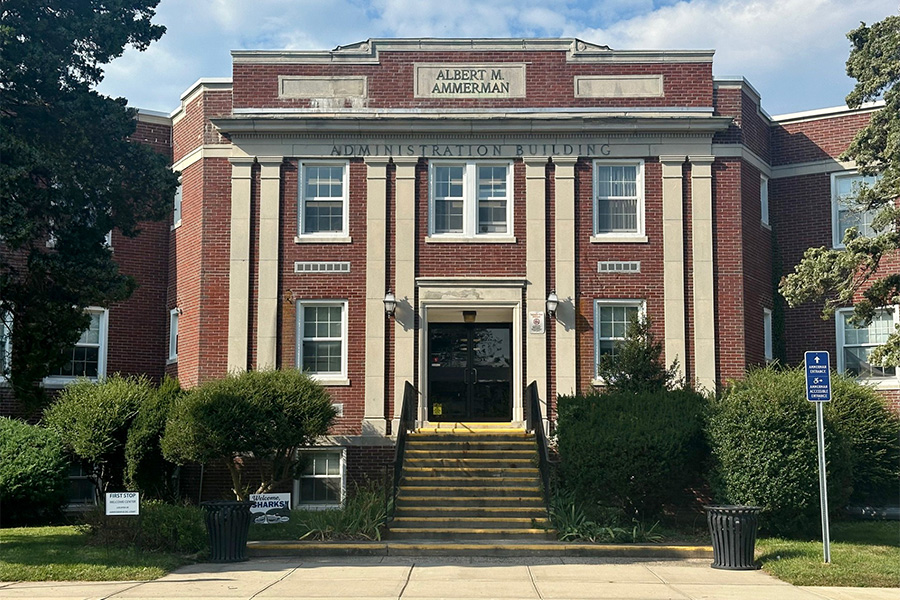

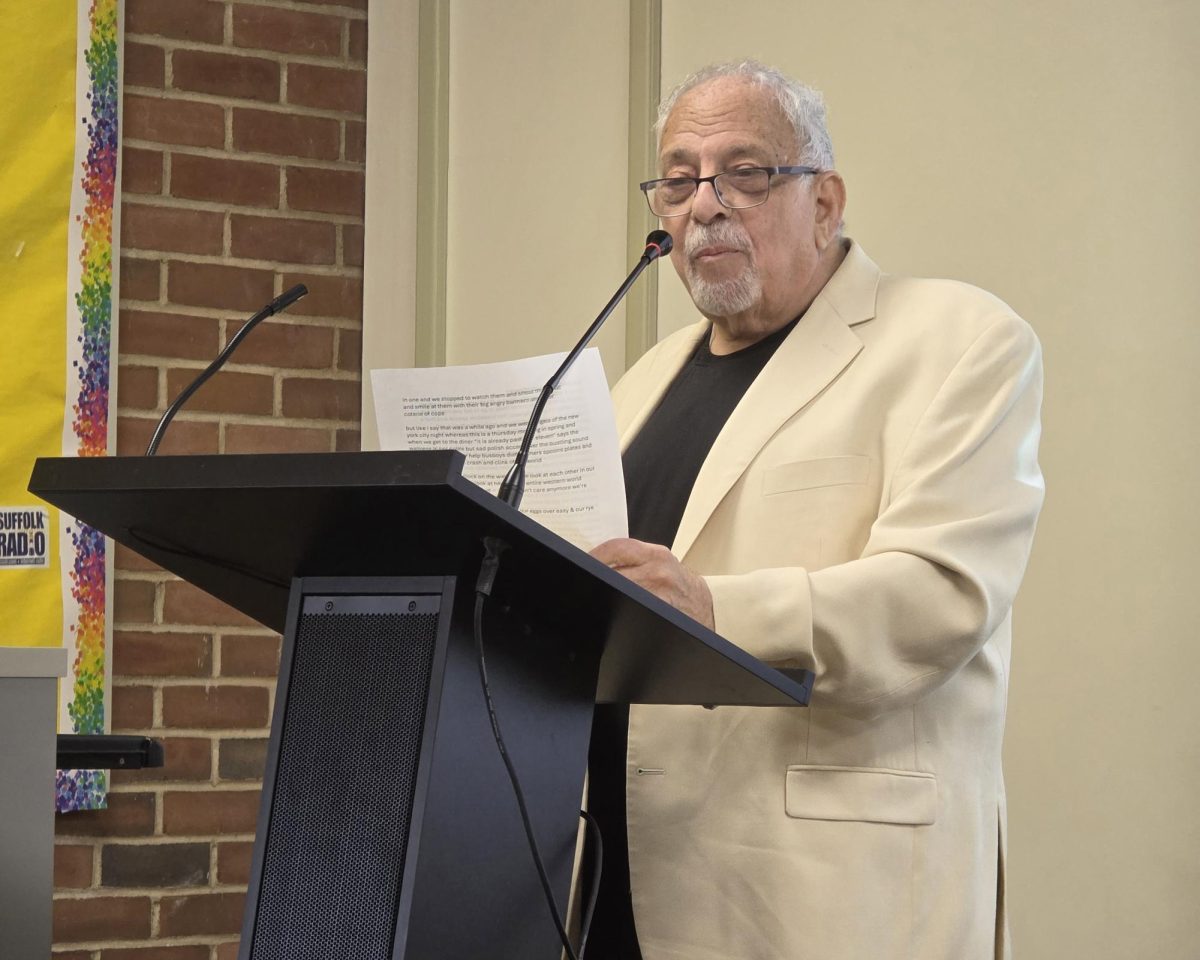
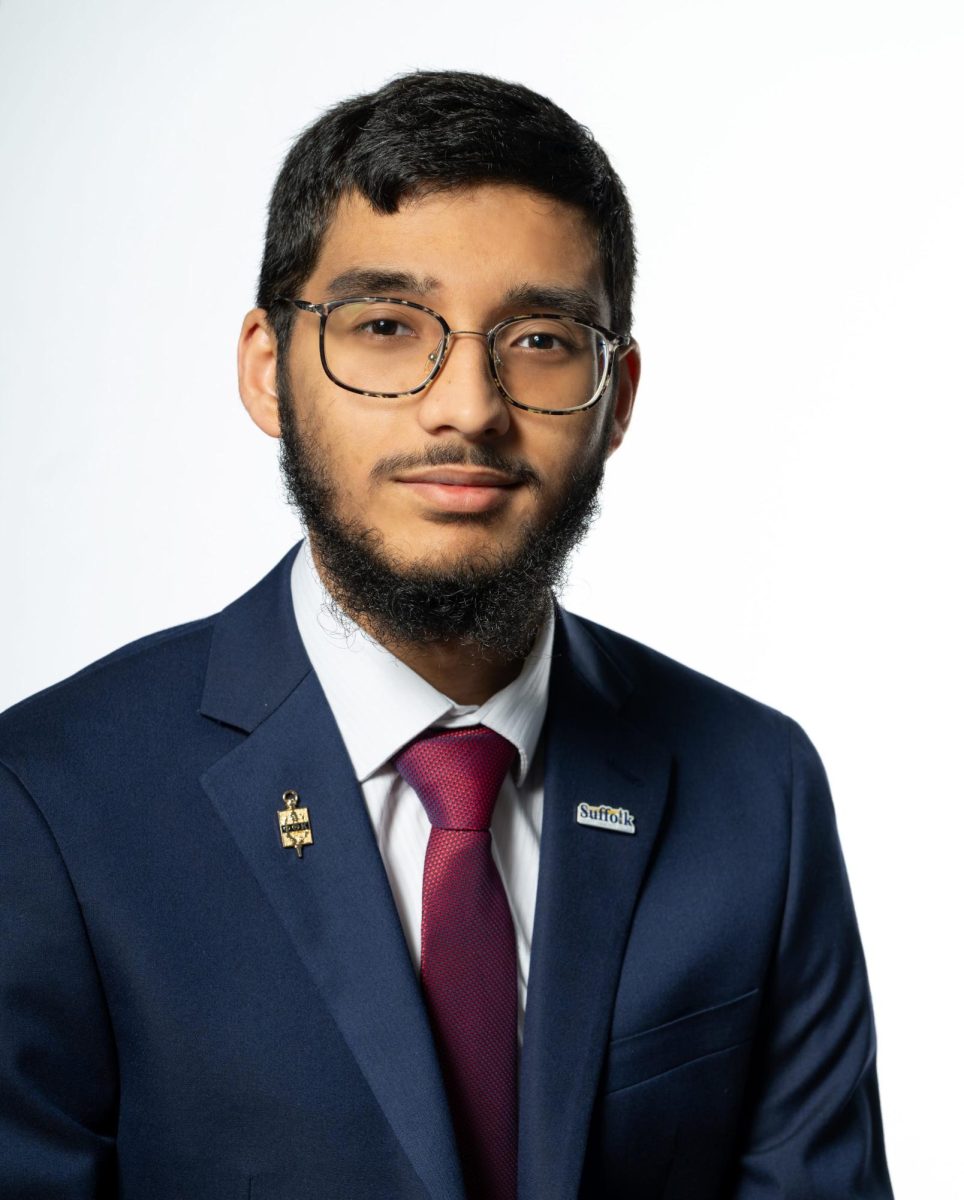


































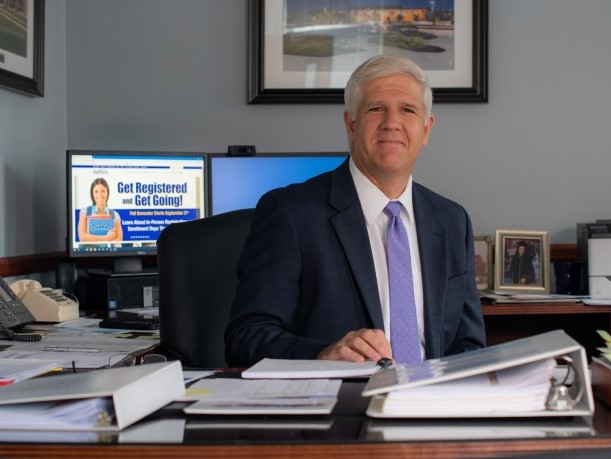
The Ammerman Faculty Senate voted to censure President Edward T. Bonahue and Executive Vice President Irene Rios on April 8 to express its displeasure over the leaders’ handling of the Beacon program, which allows high school students to earn college credit.
The 15-4-4 vote by the faculty’s Ammerman campus governance body followed events that angered many faculty members, who said Bonahue and Rios intentionally held back information. This most recent issue involved a Beacon pilot program under discussion with the Islip Union Free School District that would have allowed high school students to earn 60 college credits, or the equivalent of a full associate degree.
Suffolk’s existing Beacon provides high school juniors and seniors, as allowed by law, with the opportunity to take college-level courses and earn credits. The program allows students to earn up to 30 transferable credits, minimizing the time needed to earn a college degree, and is offered at a reduced tuition rate with no additional college fees.
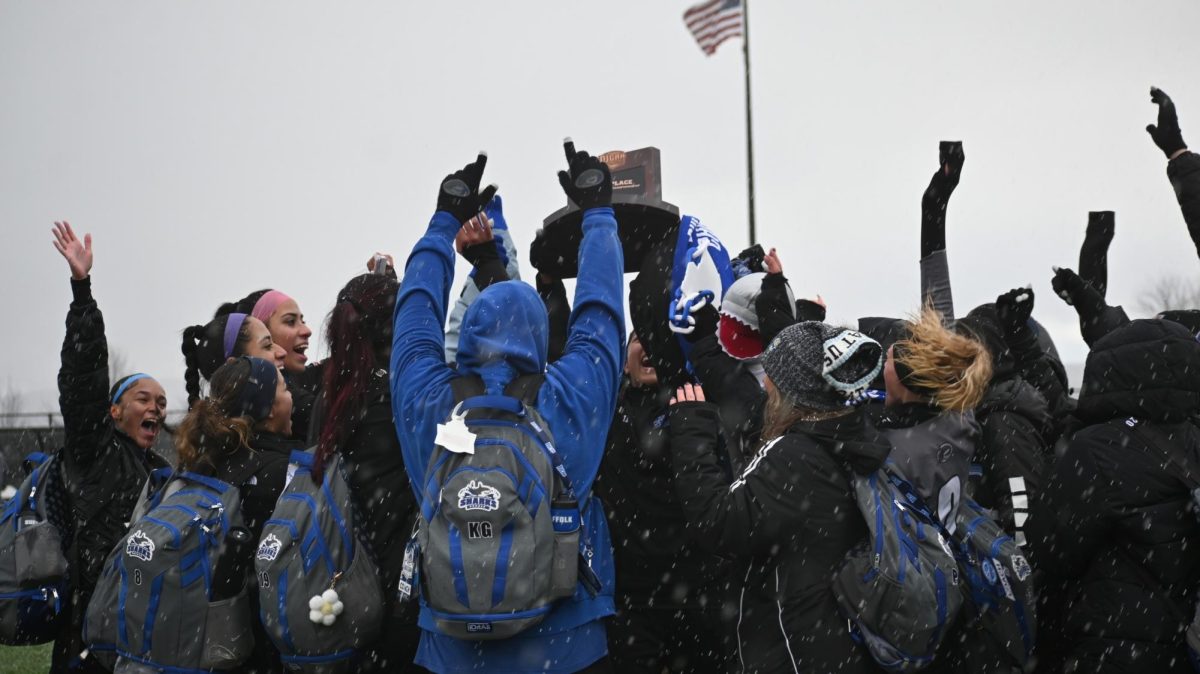
The censure vote followed a similar measure by the Grant campus’ faculty governance body and came after the president held listening sessions with faculty and staff at each of the campuses. These sessions followed a March 10 presentation by Bonahue at the Islip school board meeting, and a meeting with the Suffolk Board of Trustees on March 19. Faculty union members showed up clad in red shirts to represent their union status in opposition to the expansion of the Beacon program.
At the Islip school board meeting, Bonahue said there had only been one meeting with Islip officials and emphasized that it is a highly regulated area and “more conversations need to happen.” Islip Superintendent Dennis P. O’Hara then outlined a vision for an expanded Beacon program there that could include starting with ninth graders, whereas only juniors and seniors are currently allowed by law.
Dante Morelli, president of the Faculty Association, the Suffolk faculty union, said at the Suffolk Board of Trustees meeting that the pilot program as advertised by the Islip School District “was a threat and an attack on our labor,” referring to FA members, and called the plan “academically unsound and academically inappropriate.”
Morelli added that he immediately started getting calls from irate faculty about the Beacon-Islip pilot.
“We were told that Islip Public Schools led a little too much with this, did not understand what the ultimate goal was and it should not have been advertised in such a manner,” he told Compass News in a separate interview.
Faculty lets loose at ‘listening sessions’
At the Ammerman listening session, faculty expressed frustration over the Beacon program as a whole, including its curriculum, high school teacher credentials, academic integrity, working with college liaisons and the college’s own enrollment rate.
Academic chair and biology professor Vladimir Jurukovski explained, “In the past five years the faculty and chairs have insisted that the Beacon program must be improved, which includes the quality of courses, [having high school teachers follow Suffolk syllabi] and having qualified teachers to teach.”
Music professor Alice Cavanaugh said, “A lot of why this meeting is happening boils down to respecting the faculty. We want to be a part of the solution and we feel like we are being pushed aside.”
English professor Elizabeth McCormick added, “Our problem is not purely one of communicating, and that’s why the faculty is upset.”
Morelli, of the FA, said, “I appreciate the administration wanting to listen to the faculty and the concerns regarding Beacon. However, with regards to what happened a few weeks ago with Islip Public Schools offering an accelerated degree to be earned simultaneously with a high school diploma, we feel as if the listening session came too little, too late.”

Changes following listening sessions
Following the listening sessions, Bonahue sent a memo to the school community announcing the approval of a college-wide joint subcommittee for dual-enrollment programs.
“Additionally, any and all future proposals related to significant changes in dual-enrollment programming will be reviewed under the auspices of shared governance.”
“To respond directly to the heart of the matter: The college will not endorse the concept of ‘simultaneous’ associate degrees in high schools,” Bonahue said.
‘It was about a pattern of behavior’
Christine Davidson, who spoke at the Senate meeting as an at-large member representing the faculty as a whole, said in a follow-up email to the meeting that the resolution “was not specifically about the Beacon-Islip incident.”
“It was about a pattern of behavior of circumventing the processes of shared governance. And the fact that faculty must be provided with an opportunity to participate in the formulation of policies and programs of study through established methods of shared governance. They should not be told what has happened afterwards,” said Davidson, who also chairs the College Academic Standards Committee, which is responsible for reviewing and providing recommendations on matters related to academic standards. Additionally, she is the Ammerman campus general studies program coordinator.
Move to postpone censure denied
At the start of the censure resolution discussion, Lisa Behnke, an academic adviser, sought to postpone the matter. She stated that her constituents, who are majority non-teaching faculty, felt they needed more time to assess the situation and that the president had already stated his willingness to make changes in an email to Suffolk faculty and staff.
However, one senator suggested that a censure be the minimum move that should be made but did not elaborate.
Bonahue and Rios both spoke before the Ammerman Senate voted. They each affirmed their commitment to shared governance, and Bonahue took full responsibility for the situation. Rios said she advised against the initiative when she became aware of it.
The future of the Beacon-Islip pilot
In an interview with Compass News, Bonahue provided a status update on the Beacon-Islip program.
“Are we still pursuing it? Probably not in the form that it was originally presented,” Bonahue said. “We have not endorsed the idea that students can simultaneously earn a high school diploma and a college degree. Actually, state law doesn’t allow that.”
There are certain states throughout the country that offer dual-enrollment programs for their high school students, which is “maybe where some of this is coming from,” he said.
“Another thing that’s driving it is the cost of college,” Bonahue added. “School districts are asking the questions: How can we deliver value for our families? How can we be more intentional about the pathways for students that can give our students and families opportunities to save money?”
For some, the answer is in expanding the Beacon program and what it has to offer students and their families, he said.
“We do have an ongoing conversation with Islip because they’re interested in expanding opportunities for students in early college. That’s something that our faculty have supported and so we are exploring that opportunity.”
Rebuilding trust with faculty
Regarding how he can rebuild trust with faculty members who feel he did not appropriately include them, Bonahue said, “I’ve been actively going to where the conversations need to happen. I’ve met with our governance chairs. I have met with a variety of committees. I’ve repeatedly taken ownership for the situation and for the need to improve the situation. I think that’s what any good leader does. To rebuild trust, I have to do that work every day. I have to be upfront and work with faculty every day. It takes time.”
He added: “This conversation intersects with some additional conversations about how we improve instruction on campus. Questions about academic quality, commonality of curriculums, standards of curriculum. Increasingly, we’re asking those questions not only about our high school programs, but SUNY is asking us to bring those same questions to our classes as well.”
CORRRECTION: The May print version of this story incorrectly stated English Prof. Elizabeth McCormick’s impressions of the Beacon issue. In fact, she said it was not simply a failure of communication.